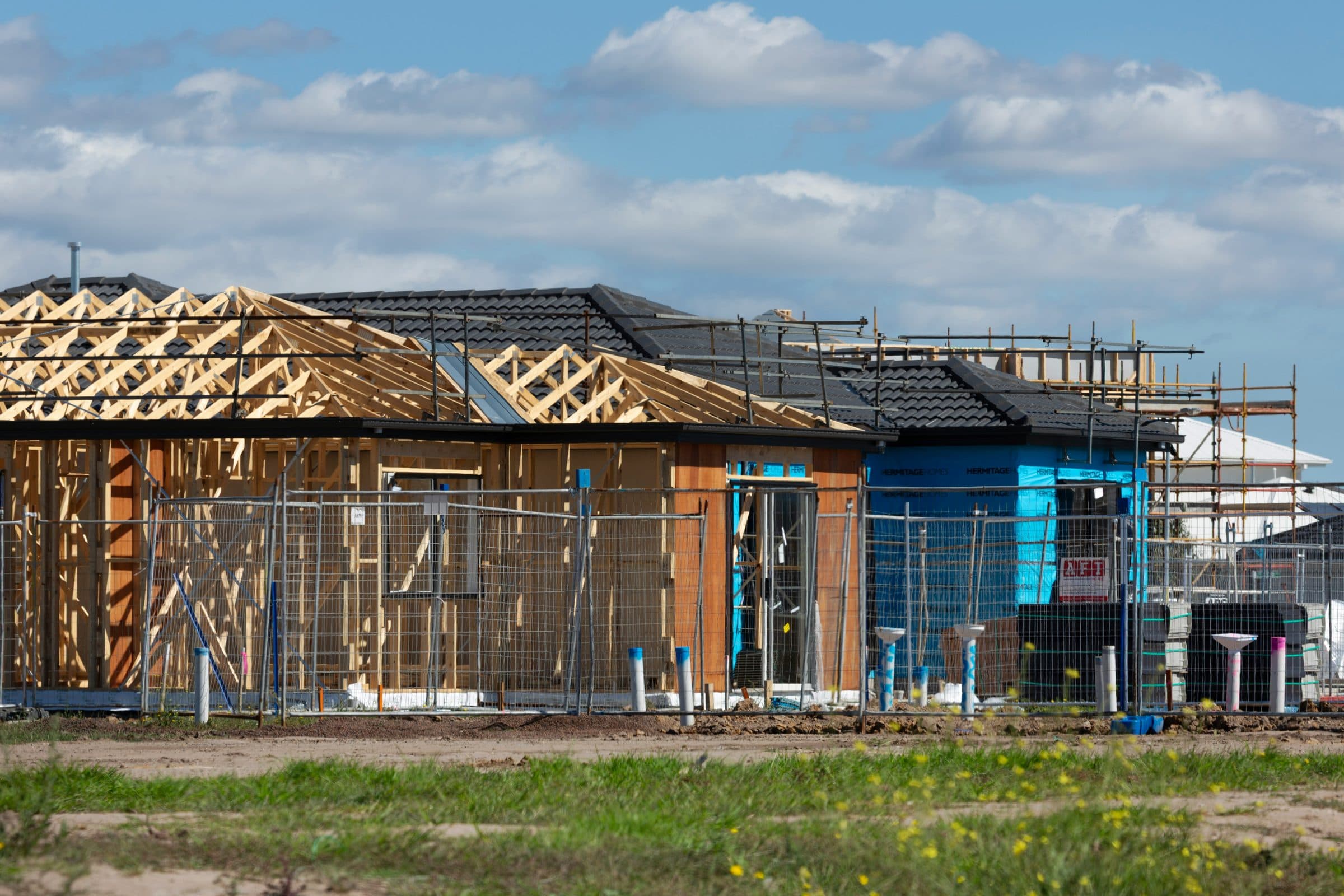
SB 9 vs ADU: the difference
Both laws add homes to single-family lots without a public hearing, but they create different things.
- ADU law lets you add accessory units next to or inside a main home. On a single-family lot, Government Code section 66323 requires cities to approve a conversion ADU, a new detached ADU and a junior ADU, in any combination. The ADU stays tied to the main house. For the basics, see what an ADU is.
- SB 9, passed in 2021, is two laws in one. Section 65852.21 requires ministerial approval of up to two primary homes on a lot in a single-family zone. Section 66411.7 requires ministerial approval of an urban lot split, dividing one lot into two.
The distinction matters for money. HCD's ADU handbook calls SB 9 units “primary units” that are distinct from ADUs. In practice, that means an SB 9 home usually pays the fees a new house pays, while an ADU gets the fee breaks written into ADU law. The two laws are complementary, though, and a lot can use both.
Side by side
The rules below are the state minimums. Your city can be more generous, but it can't be stricter.
| Rule | ADU | SB 9 unit or lot split |
|---|---|---|
| Where it applies | Residential and mixed-use zones | Single-family zones in urbanized areas only |
| What you get | Accessory units on the same lot as the main home | Up to two primary homes per lot, a split into two lots, or both |
| Size the city must allow | 800 sq ft detached ADU with 4-ft side and rear setbacks | At least 800 sq ft per unit |
| Side and rear setbacks | No more than 4 ft for a new detached ADU; none for conversions | Up to 4 ft; none for an existing structure or one rebuilt in place |
| Parking | None near transit and in several other cases | Up to 1 space per unit; none within ½ mile of high-quality transit or 1 block of car share |
| Owner occupancy | Not allowed for ADUs | Lot split: 3-year affidavit to live in one unit |
| Approval deadline | 60 days from a complete application | 60 days from a complete application |
| Rental term | Longer than 30 days for the ADUs a city must approve | Longer than 30 days |
| Sell separately | Only in narrow cases or as a condo where allowed | Yes, after a lot split |
The ADU column comes from section 66323 (the guaranteed ADUs and their rental term), section 66315 (no owner occupancy), section 66317 (the 60-day clock) and section 66322 (parking). For the full ADU rulebook, see California ADU laws, and for parking detail, our ADU parking requirements guide.
SB 9 two-unit projects
The duplex half of SB 9 works on a lot as it is, with no split. Section 65852.21 covers a project of no more than two new units, or one new unit added to an existing one, in a single-family zone. The city reviews it ministerially, against objective standards only.
- Size. Local standards can't physically preclude two units or keep either below 800 square feet of floor area.
- Setbacks. The city may require up to 4 feet from the side and rear lot lines. An existing structure, or one rebuilt in the same place and size, needs no setback.
- Parking. Up to one space per unit, and none within half a mile of a high-quality transit corridor or major transit stop, or within one block of a car share vehicle.
- Denial. Only with a written finding of a specific, adverse impact on health and safety that can't feasibly be mitigated.
- Timeline. Approve or deny within 60 days of a complete application, or it's deemed approved.
- Rentals. Any rental must be for longer than 30 days.
The two units can be attached, like a duplex, or separate buildings. HCD's SB 9 fact sheet adds that standards must apply uniformly in the zone, and it describes letters telling Riverside it can't require side or rear setbacks over 4 feet above the first floor, and Laguna Beach that SB 9 doesn't allow an owner-occupancy rule on a two-unit project.
SB 9 lot split
The SB 9 lot split, which the law calls an urban lot split, is the part an ADU can't match: it creates a second lot you can sell. Section 66411.7 sets the terms.
| Requirement | Rule |
|---|---|
| Number of new lots | Two, of approximately equal size |
| Smallest lot | At least 40% of the original lot, and at least 1,200 sq ft unless the city allows smaller |
| Zone | Single-family residential, in an urbanized area or urban cluster |
| Prior splits | Not on a lot created by an earlier SB 9 split, or next to one the same owner split |
| Owner affidavit | Intend to live in one unit as your principal residence for 3 years from approval |
| Units per new lot | City need not allow more than two, counting ADUs and JADUs |
| What the city can't require | Right-of-way dedications, offsite improvements, or fixing nonconforming conditions |
| Approval | Ministerial, within 60 days of a complete application |
The owner affidavit is the rule that trips up investors. The applicant must sign it, and the city can't add other owner-occupancy rules. The statute exempts community land trusts and qualified nonprofits. An ADU has no equivalent requirement.
The city may require easements for utilities and access to a public right-of-way. Each new lot then gets its own two-unit allowance, which is where the “four units” figure comes from.
A split is also a different kind of approval from an ADU. An ADU needs a building permit. A lot split is a parcel map that must meet the objective requirements of the Subdivision Map Act, and only then do you apply for building permits on the new lots. Budget for a surveyor and the map fees on top of construction, and expect the split to add time before any building starts.
SB 9 and ADUs together
SB 9 and ADUs can combine, but how depends on whether you split the lot.
Without a lot split
HCD's fact sheet says a lot not created by an SB 9 split can have up to two primary homes under SB 9 plus the ADUs that ADU law allows. Its example is two SB 9 units, an ADU and a JADU. The ADU handbook notes this can produce more units than either law allows alone.
Not every city agrees. In a February 2026 letter to Glendale, HCD said a lot with a house and an existing ADU can still add a second primary home under SB 9. Glendale had refused, counting the ADU as one of the two SB 9 units, and told HCD it would keep applying its own reading.
With a lot split
Once a lot is split, the ceiling is two units per new lot. The lot split statute defines “unit” to include the primary home, ADUs and JADUs. Those two could be two primary homes, or one home and an ADU, or one home and a JADU. On top of that, section 65852.21(f) says a city doesn't have to permit an ADU or JADU on a lot that uses both the split and the two-unit law.
| Scenario | Maximum the city must allow |
|---|---|
| ADU law only, single-family lot | Main home + conversion ADU + detached ADU + JADU |
| SB 9 two units, no split | Two primary homes + the ADUs ADU law allows (HCD reading) |
| SB 9 lot split | Two units on each new lot, ADUs and JADUs counted, so four total |
| Lot split plus two-unit law on the same lot | City may refuse any ADU or JADU |
Which lots qualify for SB 9
ADU law reaches far more lots than SB 9. The HCD fact sheet lists who's out. SB 9 doesn't apply when the project would demolish or alter housing that:
- is rent-restricted for moderate-, low- or very low-income households;
- is under any form of rent or price control; or
- has been occupied by a tenant in the last three years.
It also doesn't apply to a lot where units were taken off the rental market under the Ellis Act in the last 15 years, to contributing structures in historic districts and listed historic resources, or to environmentally sensitive and hazardous sites such as wetlands and prime farmland, using a list frozen as it read on September 16, 2021. A 2025 law, AB 1061, clarified the historic-district exclusion.
Fire and flood areas are on that hazard list with conditions; the City of San Diego's version is below. For ADUs in those areas, see ADUs in a fire hazard zone and the ADU coastal zone guide.
SB 9 in San Diego
The City of San Diego implements SB 9 through two code sections, explained in Information Bulletin 409 (updated July 2026). A Multi-Dwelling Unit Development (MDUD) is up to two homes on one lot under SDMC 143.1310. An Urban Lot Split (ULS) under SDMC 143.1315 divides a lot into no more than two separately conveyable lots. You can use either or both.
| Topic | City of San Diego rule |
|---|---|
| Eligible zones | RS, RE, RX and RT zones and qualifying Planned District zones |
| ADUs with MDUD and ULS together | Not allowed; an existing ADU must be removed or become one of the two units |
| ADUs with MDUD, no split | Allowed, but never more than four units in total |
| Parking | None in a Transit Priority Area; outside one, 1 space per unit for the third and fourth units |
| Setbacks | A one-story unit 16 ft or less may sit on the interior side or rear line; taller units need 4 ft next to residential |
| Fire zones | Excluded in Very High Fire Hazard Severity Zones unless Chapter 7A is met |
| Coastal Overlay Zone | Coastal Development Permit required for every MDUD and ULS |
| Rentals | No rentals under 31 days |
| Fees | MDUD units pay school fees, Development Impact Fees and RTCIP fees |
The fee line is the big money difference. In the city, the municipal code exempts the first two ADUs on a lot from Development Impact Fees regardless of size, while an SB 9 home pays them. Statewide, ADUs of 750 square feet or less pay no impact fees. See what an ADU costs in San Diego for fee figures by size.
Selling is the other difference. State law allows separate sale of an ADU only in narrow nonprofit cases or as a condominium under a local ordinance. San Diego's ADU code allows ADU condo sales, a more complex route than an SB 9 split.
The paperwork differs too. In the city, an MDUD unit goes through a building permit, while an Urban Lot Split is a parcel map with its own mapping and right-of-way fees. Before the split is recorded, the owner signs the city's owner-occupancy affidavit, form DS-3062, which is recorded with the County Recorder. An ADU skips all of that; the city's process is in our ADU permit guide for San Diego.
If you're in unincorporated San Diego County or another city, its own SB 9 ordinance applies within the same state limits.
Which path fits your goal
| Your goal | Usually the better fit |
|---|---|
| Rental income while you keep the property | ADU, for lower fees and no owner-occupancy rule |
| Housing for a parent or adult child | ADU or JADU |
| A second lot to sell or refinance on its own | SB 9 lot split |
| A second full-size house on your lot | SB 9 two-unit project, or an ADU up to your city's size limit |
| The most units on one lot you'll never split | SB 9 two units plus ADUs, where your city follows HCD's reading |
| A lot with recent tenants or rent control | ADU; SB 9 is excluded |
ADU rights are also growing. Starting January 1, 2027, AB 956 requires cities to allow two detached ADUs on a single-family lot. Read California ADU laws for 2027 before you commit to a split.
Either path is new construction that needs a B, General Building contractor. Read how to hire an ADU contractor, check a contractor's license, or compare verified ADU builders in San Diego.
Common questions
SB 9 vs ADU: what is the difference?
Can you build an ADU on an SB 9 lot?
How does an SB 9 lot split work?
Does SB 9 require owner occupancy in California?
How many units can you build with SB 9 and an ADU?
Sources
- California Legislative InformationGovernment Code § 65852.21 (SB 9 two-unit developments)
- California Legislative InformationGovernment Code § 66411.7 (SB 9 urban lot splits)
- California Legislative InformationGovernment Code § 66323 (ADUs every city must approve)
- California Legislative InformationGovernment Code § 66315 (no owner occupancy for ADUs)
- California Legislative InformationGovernment Code § 66317 (ADU permit timelines)
- California Legislative InformationGovernment Code § 66322 (ADU parking)
- California Legislative InformationGovernment Code § 66311.5 (ADU impact fees)
- California Legislative InformationGovernment Code § 66341 (separate sale of an ADU)
- California Department of Housing and Community DevelopmentHousing Law Fact Sheet: Duplexes and Lot Splits (SB 9), April 2026
- California Department of Housing and Community DevelopmentLetter of Technical Assistance: City of Glendale (February 10, 2026)
- California Department of Housing and Community DevelopmentAccessory Dwelling Unit Handbook (March 2026)
- City of San Diego Development ServicesInformation Bulletin 409: Multi-Dwelling Unit Developments and Urban Lot Splits
- City of San DiegoSan Diego Municipal Code § 141.0302, Accessory Dwelling Units
- City of San DiegoSan Diego Municipal Code Ch. 14, Art. 2, Div. 6 (§ 142.0640 Development Impact Fees)
- Office of the Governor of CaliforniaGovernor Newsom signs housing legislation (September 29, 2026)
General information, not legal or financial advice. Rules and fees change; confirm with your city's permit office before you rely on them.