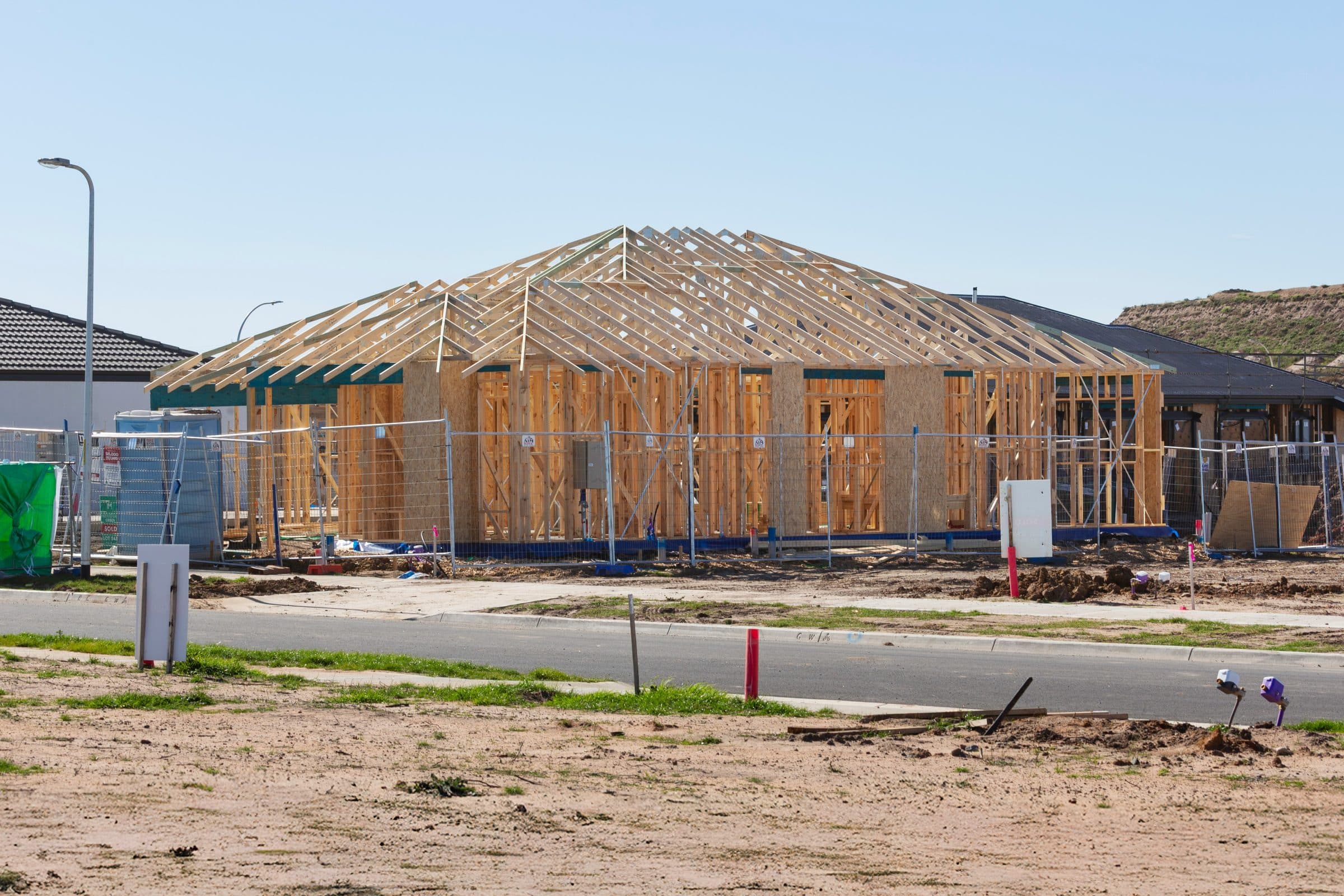
Attached and detached ADUs defined
California defines an accessory dwelling unit as “an attached or a detached residential dwelling unit” with complete independent living facilities: permanent provisions for living, sleeping, eating, cooking and sanitation on the same lot as a house or apartment building. Both types are full homes. The difference is the structure. For the basics, see what an ADU is.
Attached ADU (ADU addition)
An attached ADU is built onto the main house and shares at least one wall, or a floor or ceiling, with it. Most are additions to the side or rear of the house, or a second story over it. A junior ADU is different: it's carved out of space already inside the house and is capped at 500 square feet.
What is a detached accessory dwelling unit?
A detached ADU is a separate building in your yard with its own foundation, walls and roof. It's what most people mean by a backyard cottage or granny flat. Converting an existing detached garage or shed counts as a conversion, which has its own rules: see the garage conversion ADU guide.
Attached vs detached ADU compared
| Attached ADU | Detached ADU | |
|---|---|---|
| Size cap a city may set | 50% of the existing house, but never below 800 sq ft | 1,200 sq ft |
| Height a city must allow | 25 ft or the house's zone limit, whichever is lower | 16 ft; 18 ft near major transit (+2 ft for roof pitch) |
| Side and rear setbacks | No more than 4 ft | No more than 4 ft |
| Fire separation | Fire-rated wall (and floor, if stacked) between units | Separation distance from lot lines and other buildings |
| New solar panels | Not required (treated as an addition) | Required, with exceptions |
| Statewide ministerial approval (§ 66323) | Only if built inside the existing or proposed house | Yes, up to 800 sq ft with 4-ft setbacks |
| Privacy | Shared wall, shared yard access | Separate building |
| San Diego cost (Lars Remodel) | $200,000–$350,000+ | $250,000–$450,000+ |
Sources: Gov. Code §§ 66313, 66314, 66321 and 66323; City of Hayward plan checklist (example of how cities apply the building code); California Energy Commission; Lars Remodel, October 2026.
Attached ADU size limit
Under the state's default rules, which apply where a city's ordinance doesn't say otherwise, an attached ADU can't exceed 50 percent of the existing primary dwelling. A detached ADU can't exceed 1,200 square feet.
The 50% rule has a floor. A city can't use a size limit based on a percentage of the house, or lot coverage, floor area ratio, open space or front setback rules, to block an ADU of at least 800 square feet with 4-foot side and rear setbacks. So a 1,200-square-foot house can still get an 800-square-foot attached ADU, even though 50% would be 600.
Cities can write their own maximums, but not below 850 square feet, or 1,000 square feet for a unit with more than one bedroom. Since January 1, 2026, these sizes are measured as interior livable space.
Detached ADU setbacks and height
For a new ADU, attached or detached, a city can require side and rear setbacks of no more than 4 feet. Converting an existing structure, or rebuilding one in the same place and size, needs no setback at all.
| ADU | Minimum height a city must allow |
|---|---|
| Detached, single-family or multifamily lot | 16 ft |
| Detached, within ½ mile walk of a major transit stop or high-quality transit corridor | 18 ft, plus up to 2 ft to match the house's roof pitch |
| Detached, on a lot with a multistory multifamily building | 18 ft |
| Attached | 25 ft or the zone's height limit for the house, whichever is lower |
Source: Gov. Code § 66321. Cities don't have to allow an ADU taller than two stories. Height is where attached units have the edge: a second-story ADU over the house or garage gets the 25-foot allowance, while a detached unit is only guaranteed 16. See the two-story ADU guide for what that means in practice.
Which types the state guarantees
Government Code section 66323 lists ADUs a city must approve on a ministerial permit, overriding most local rules. On a single-family lot, that's:
- one ADU and one junior ADU within the existing or proposed house, or within an existing accessory structure (which may grow up to 150 square feet, only for entry and exit), and
- one new detached ADU of up to 800 square feet with 4-foot side and rear setbacks, at the state's height limits.
A new detached ADU is a guaranteed type. A new attached addition to an existing house is not in that list, so it goes through the city's regular ADU rules, still protected by the 800-square-foot guarantee above. An attached ADU built as part of a new house does fit, because it's within the proposed house.
The category also affects utility charges. An ADU in the first group can't be required to install a new utility connection or pay a connection fee or capacity charge, unless it's built with a new house. Other ADUs, including new detached units and attached additions, can be charged in proportion to their size or plumbing fixtures.
Fire walls, solar and utilities
Fire separation. An attached ADU is a second dwelling joined to yours, so the building code requires a fire-rated separation. The City of Hayward's plan checklist, for example, requires a 1-hour fire-rated wall from the bottom of the footing to the underside of the roof deck, and a rated floor/ceiling too when the ADU sits under the house's living space. A detached ADU is treated as a separate home and must meet the code's rules on exterior wall protection, openings and distance from property lines. Ask your designer how San Diego applies these to your plan.
Fire sprinklers. An ADU doesn't need sprinklers if the main house isn't required to have them, and building one can't trigger sprinklers in the house.
Solar. The California Energy Commission says newly built detached ADUs must have new solar panels to meet the prescriptive Energy Code, though exceptions can apply. Attached ADUs count as additions, so solar isn't required.
Utilities. Lars Remodel lists the main site risks for each type: structural tie-in and short but complex utility runs for attached units; access, trenching, electrical service capacity and drainage for detached ones. Snap ADU puts a separate SDG&E meter at $10,500–$15,000 and a sewer pump, if one is needed, at about $5,000.
Attached vs detached ADU cost
| Type | Planning range |
|---|---|
| Attached ADU | $200,000–$350,000+ |
| Detached ADU | $250,000–$450,000+ |
| Garage conversion ADU (for reference) | $150,000–$225,000+ |
Lars Remodel describes these as planning ranges from its own projects, not quotes. Snap ADU, which builds detached units, publishes all-in prices as of March 2026:
| Size | Typical all-in price | Per sq ft |
|---|---|---|
| 500 sq ft, 1 bed | $300,000 | $600 |
| 750 sq ft, 2 bed | $350,000 | $465 |
| 1,000 sq ft, 2 bed / 2 bath | $425,000 | $425 |
| 1,200 sq ft, 3 bed / 2 bath | $450,000 | $375 |
Snap's all-in price includes design, permits, sitework and utilities, with standard finishes. It lists finish upgrades, extra sitework such as retaining walls, extra utilities and fire-rated construction as additional.
Fees by size
Impact fees can't be charged on any ADU of 750 square feet or less; above that, they must be proportional to the main house. In the City of San Diego, the first two ADUs on a property are exempt from development impact fees whatever their size. Other city charges still apply. Snap ADU's February 2026 estimate of total City of San Diego fees runs from $10,734 at 499 square feet to $31,111 at 1,199 square feet. Those are a builder's estimates, not an official fee schedule.
That fee math changes on January 1, 2027. Under SB 1117, impact fees on a larger ADU can be charged only on the square footage above 750, not the whole unit. That mostly helps big detached units.
Either way, the San Diego County Assessor adds only the value of the new construction to your property tax; the existing house isn't reassessed. For the complete budget, see what an ADU costs in San Diego, the ADU construction cost breakdown or the ADU cost calculator.
San Diego rules
The City of San Diego's code follows state law and is looser in places:
- Size: 150 to 1,200 square feet for a new ADU. Conversions of existing space have no maximum.
- Setbacks: an ADU 16 feet tall or less needs no interior side or rear setback, except 4 feet in high and very high fire hazard severity zones. That helps a one-story detached unit fit on a narrow lot.
- Stories: two at most in single-family zones.
- Parking: none, except in the Beach Impact Area outside transit priority areas.
- Rentals: at least 31 days, for either type.
- Selling: the city has opted in to ADU condominium sales.
The city accepts pre-approved plans for detached units; see pre-approved ADU plans in San Diego and the ADU permit process in San Diego.
Which one to build
An attached ADU makes sense when your backyard is small or steep, you want to stay close to a family member, or a second story over the house or garage is the only place with room. It skips the solar requirement and keeps utility runs short, but you'll pay for structural tie-in and fire-rated walls, and you'll live through construction on your own house.
A detached ADU makes sense when you have yard space, want the most privacy between you and a tenant, or need more than half your house's size. It's the guaranteed statewide type, separate from your home, and in San Diego can reach 1,200 square feet. Expect more site work: trenching, possibly a new meter and solar panels.
Whichever you pick, get bids from builders who've done that type. Start with verified ADU builders in San Diego, check a contractor's license and read how to hire an ADU contractor before you sign.
Common questions
Is an attached or detached ADU cheaper?
What is the attached vs detached ADU size limit?
What are the setbacks for a detached ADU?
How tall can a detached ADU be in California?
Does a detached ADU need solar panels?
Is an ADU addition the same as an attached ADU?
Sources
- California Legislative InformationGovernment Code § 66313 (definitions)
- California Legislative InformationGovernment Code § 66314 (local ADU ordinances)
- California Legislative InformationGovernment Code § 66321 (size, height and setback limits)
- California Legislative InformationGovernment Code § 66323 (ADUs every city must approve)
- California Legislative InformationGovernment Code § 66311.5 (fees)
- City of San DiegoSan Diego Municipal Code § 141.0302, Accessory Dwelling Units
- City of San DiegoSan Diego Municipal Code § 142.0640, Development Impact Fees
- City of HaywardSingle-family ADU plan review checklist
- California Energy CommissionEnergy Code Support Center: General information on ADUs (2025 code)
- Lars RemodelADU cost in San Diego (updated October 2026)
- Snap ADUHow much does an ADU cost in San Diego? 2026 pricing
- Snap ADUAll about ADU fees and waivers
- Snap ADUCost drivers: ADU sitework
- San Diego County Assessor/Recorder/County ClerkReassessments
- Office of the GovernorGovernor Newsom signs housing legislation (September 29, 2026)
General information, not legal or financial advice. Rules and fees change; confirm with your city's permit office before you rely on them.