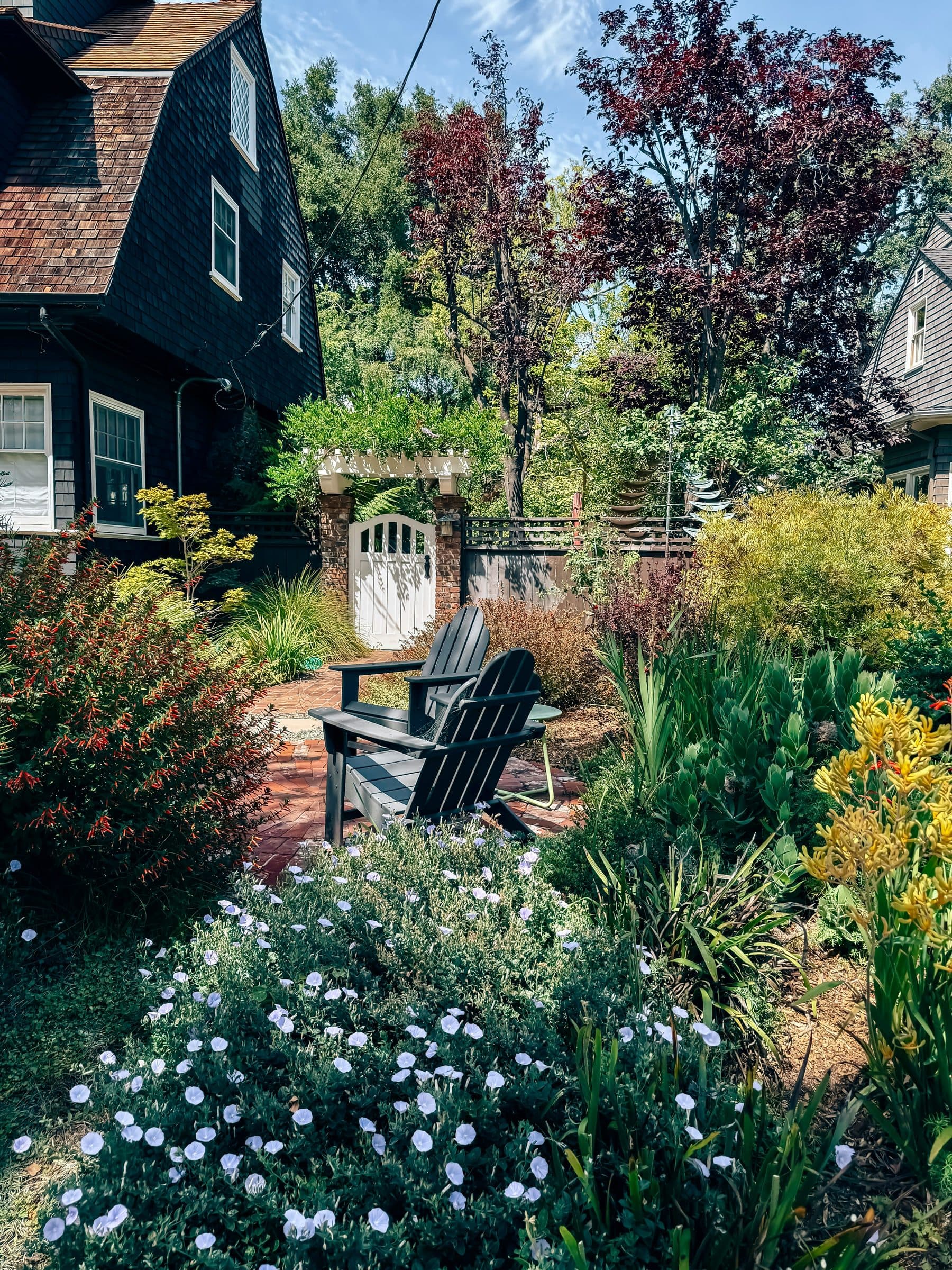
Why an ADU for seniors
Older owners usually build an ADU for one of three reasons: to bring a parent close but keep separate front doors, to downsize into the ADU and rent or hand over the main house, or to give a caregiver private quarters on site. California makes each of these easier. There's no owner-occupancy requirement for an ADU, so you can live in either unit or rent both. A junior ADU of up to 500 square feet inside the house is a cheaper option if a bedroom suite or attached garage is already there.
Our guide to granny flats and in-law units covers the names, the family setups and a basic aging-in-place checklist. This guide goes further on design dimensions, money and taxes. If you're new to the topic, start with what an ADU is.
| Setup | Who lives where | Things to settle early |
|---|---|---|
| Parent in the ADU | Parent in the ADU, adult child's family in the house | Who owns the ADU, who pays for it, what happens if the parent needs more care |
| Downsizing in place | Older owner in the ADU, main house rented or given to family | Landlord rules, insurance, how a future transfer to children is taxed |
| Caregiver on site | Owner in the house, live-in caregiver in the ADU or JADU | Whether the caregiver pays rent, and a written agreement |
When a parent pays for an ADU on a child's lot
A common plan is for a parent to sell their house and put part of the proceeds into an ADU behind an adult child's home. The catch is ownership. An ADU normally sits on the same parcel as the house, so whoever owns the lot owns the ADU, whoever paid for it. State law lets a city adopt an ordinance allowing ADUs to be sold as condominiums, and the City of San Diego has done so, but most cities haven't. Before money changes hands, decide in writing whether it's a gift, a loan secured by the property or a share of ownership, and what happens if the parent moves to care, the child sells or a marriage ends. An estate-planning lawyer can draft this; it also affects the property tax questions below.
Aging-in-place ADU design
The cheapest accessibility is the kind drawn into the plans. Door widths, shower curbs and floor levels are hard to change after framing. A single-story detached unit avoids stairs, and every California lot is guaranteed at least 16 feet of height for a detached ADU, which is plenty for one floor.
For dimensions, designers often borrow from the federal ADA Accessibility Standards, which were written for public buildings and businesses. They aren't a requirement for your ADU, but they're a tested benchmark for a wheelchair or walker.
| Feature | ADA benchmark | Section |
|---|---|---|
| Door clear width | 32 inches minimum, measured with the door open 90° | 404.2.3 |
| Hallways and paths | 36 inches clear minimum | 403.5.1 |
| Turning space | 60-inch diameter circle (or a T-shaped space) | 304.3.1 |
| Thresholds | 1/2 inch high maximum | 404.2.5 |
| Ramp slope | No steeper than 1:12 (1 inch of rise per foot) | 405.2 |
| Handrails | Top 34 to 38 inches above the ramp or stair | 505.4 |
| Grab bars | 33 to 36 inches above the floor | 609.4 |
| Toilet position | Centerline 16 to 18 inches from the side wall | 604.2 |
| Roll-in shower | 30 by 60 inches minimum inside, with a 60-inch entry | 608.2.2 |
| Switches and controls | Between 15 and 48 inches above the floor | 308.2.1 |
Choices that cost little at design stage
- Plan the path, not just the unit. The walk from the street or the main house should be level or gently ramped, lit and free of steps.
- Block the walls for grab bars in the bathroom during framing, even if you don't install bars yet.
- Put the bedroom, bathroom and laundry on one level, with the bathroom reachable from the bed without crossing the living room.
- Make the kitchen work seated. Some open space under a counter section and a wall oven or drawer microwave reduce bending and reaching.
- Lever handles and rocker switches are easier on arthritic hands than knobs and toggles.
For layouts, see ADU floor plans. If you're thinking of a second story for a caregiver or renter, our two-story ADU guide covers the trade-offs.
ADU grants for seniors
There is no open statewide grant that pays seniors to build an ADU. The best-known program, the CalHFA ADU grant of up to $40,000 for predevelopment costs, has been fully reserved since December 28, 2023. Be skeptical of any website or salesperson promising a “senior ADU grant.” What does exist are programs that pay for accessibility work or ease the cost of staying in your home:
| Program | Who qualifies | What it offers |
|---|---|---|
| County of San Diego home repair loans | Low-income homeowners in unincorporated San Diego County, Coronado, Del Mar, Imperial Beach, Lemon Grove, Poway and Solana Beach | Up to $25,000 for a single-family home, including accessibility and aging-in-place work |
| Medi-Cal Community Supports: home modifications | Medi-Cal members at risk of a nursing facility, with a doctor's order, if their health plan offers it | Ramps, grab bars, doorway widening and similar work, $7,500 lifetime maximum |
| VA Specially Adapted Housing (SAH) | Veterans with certain severe service-connected disabilities | Up to $126,526 (fiscal 2026) to build, buy or adapt a home |
| VA Special Home Adaptation (SHA) | Veterans with certain other service-connected disabilities | Up to $25,350 (fiscal 2026) |
| State Property Tax Postponement | Age 62+, blind or disabled, 40% equity, income limit | Defers current-year property tax at 5% interest |
- County repair loans. The county's 2026 program notice describes home repair loans for “ADA and accessibility improvements, including improvements that support aging-in-place,” for low-income owners in the areas listed above. They help adapt an existing home; they don't fund a new ADU, and the list of areas served doesn't include the City of San Diego.
- Medi-Cal home modifications. The state's Community Supports policy guide caps environmental accessibility adaptations at $7,500 per member for life, with exceptions if the member moves or their condition changes significantly. A member who doesn't own the home needs the owner's written consent, which matters if a parent lives in an ADU on a child's lot.
- VA grants. The VA's disability housing grants can go toward buying, building or changing a home the veteran will live in long term, and a separate temporary residence adaptation grant helps adapt a family member's home where the veteran is staying. The VA adjusts the maximums each fiscal year, which starts October 1, so check the current figures.
For every other grant and incentive, including local fee waivers, see our ADU grants in California guide.
Paying for an ADU after 62
Most ADUs are paid for with home equity, savings or a construction loan; our ADU financing guide compares them. For a sense of scale, Lars Remodel's October 2026 San Diego ranges are $250,000 to $450,000+ for a detached ADU and $120,000 to $200,000+ for a junior ADU. Two options are specific to older owners.
A reverse mortgage (HECM)
The federally insured Home Equity Conversion Mortgage is available only to homeowners 62 and older, and the home must be your principal residence. You need to own the home outright or have a balance small enough to pay off at closing, and you must see a HUD-approved counselor first. You don't make monthly mortgage payments; interest and fees are added to the balance, which is usually repaid by selling the house once you no longer live there.
- Limit. HUD's 2026 maximum claim amount is $1,249,125, the most home value a HECM can be based on.
- Property type. HUD allows one- to four-unit homes in which the borrower lives in one unit, so a house with an ADU can qualify.
- Ongoing costs. You must keep paying property taxes, insurance and maintenance. The CFPB warns that borrowing too early can leave you short of money when you're older.
Rent from the ADU or the main house
If you move into the ADU and rent the house, the rent can cover a loan payment. You take on a landlord's duties; see renting out an ADU and ADU insurance for the coverage you'll need.
Property tax for older owners
Building an ADU doesn't reassess your house
The San Diego County Assessor adds only the new construction at market value, and your land and house keep their existing assessed value. Long-time owners with a low Proposition 13 base keep it. Our ADU property tax guide shows how the added amount is figured.
Prop 19 if you're 55 or older
If you'd rather sell and move to a home that already has an ADU, or build a new home, Proposition 19 lets owners 55 and older (or severely disabled) carry their assessed value to a replacement home anywhere in California, up to three times. The replacement must be bought or newly built within two years of the sale. If the new home is worth more than the original (100% of its value if bought before the sale, 105% within the first year after, 110% in the second), the difference is added to the value you carry over. You file with the assessor in the county of the new home.
Prop 19 also narrowed what parents can pass to children. The low assessed value now carries over only on a family home that becomes the child's principal residence, and only up to the old value plus $1,044,586 for transfers through February 15, 2027. If an ADU is part of your plan to pass the property on, ask the assessor how your lot would be treated before you build.
Accessibility features can be excluded
Construction that makes an existing home more accessible to a severely and permanently disabled resident can be excluded from reassessment if you file form BOE-63 with a doctor's statement. The home must be owner-occupied, and features that are usual in homes not occupied by disabled people don't count. Ask your assessor how this applies to features in a newly built ADU.
Property tax postponement
The State Controller's program lets owners 62 or older, blind or disabled, with at least 40% equity, put off current-year property taxes at 5% interest. A lien secures the deferred taxes until they're repaid. For 2025-26 the household income limit was $55,181. Applications run from October 1 to February 10, funding is limited and you reapply each year.
Protections when you hire
California gives older homeowners extra time. If you're 65 or older, you have five days, not three, to cancel a home improvement contract after signing. Every owner gets the same payment protection: the down payment can't exceed $1,000 or 10% of the price, whichever is less.
The Contractors State License Board's red flags include door-to-door offers, pressure to decide today, demands for cash and claims that a written contract isn't needed. The board suggests asking a friend, relative or lawyer to review the contract before you sign. Then:
- Check a contractor's license and bond yourself.
- Read how to hire an ADU contractor and our list of ADU builder red flags.
- Compare verified ADU builders in San Diego, each matched to an active B license with a bond on file.
A planning checklist
- Picture the next 15 years, not the next two. Design for a walker or wheelchair even if nobody needs one today.
- Decide who owns and who pays, and put it in writing before construction starts.
- Price the whole project, including utility trenching and the path to the door. Our ADU cost calculator and what an ADU costs in San Diego help.
- Check programs before you design. Medi-Cal and VA help comes with conditions and paperwork, and some require approval before work starts.
- Call the assessor if you're planning a Prop 19 move, a transfer to children or an accessibility exclusion.
- Call your insurer before construction and before anyone moves in.
- Get a pre-approved plan if speed matters. See pre-approved ADU plans in San Diego, and compare their door widths, bathroom layouts and entries with the dimensions above.
Common questions
Are ADUs good for seniors?
Are there ADU grants for seniors in California?
What makes an ADU for seniors accessible?
Can I use a reverse mortgage to build an ADU?
Will building an ADU raise my property taxes if I'm a senior?
Sources
- California Legislative InformationGovernment Code § 66315 (owner occupancy)
- California Legislative InformationGovernment Code § 66333 (junior ADUs)
- California Legislative InformationGovernment Code § 66321 (size, height and setback limits)
- California Legislative InformationGovernment Code § 66342 (ADUs sold as condominiums)
- City of San DiegoSan Diego Municipal Code § 141.0302, Accessory Dwelling Units
- U.S. Access BoardADA Accessibility Standards
- Lars RemodelADU cost in San Diego (October 2026)
- California Housing Finance AgencyCalHFA ADU Grant Program outcome report (2025)
- County of San Diego Housing and Community Development Services, via CEQAnetUrban County Live Well San Diego Home Repair Program (environmental notice, July 2026)
- California Department of Health Care ServicesCommunity Supports Policy Guide, Volume 1 (updated April 2025)
- U.S. Department of Veterans AffairsDisability housing grants for Veterans
- San Joaquin County Treasurer-Tax CollectorProperty Tax Postponement
- Lake County NewsState Controller announces opening of the 2025-2026 Property Tax Postponement Program filing period
- California State Board of EqualizationBOE-63, Disabled Persons Claim for Exclusion of New Construction (sample)
- Consumer Financial Protection BureauWhat is a reverse mortgage?
- Consumer Financial Protection BureauCan anyone take out a reverse mortgage loan?
- U.S. Department of Housing and Urban DevelopmentFHA announces 2026 loan limits (December 11, 2025)
- U.S. Department of Housing and Urban Development (archive)HOC Reference Guide: Reverse Mortgages (HECM)
- San Diego County AssessorReassessments
- California State Board of EqualizationPublication 800-10: How Property Is Assessed for Property Tax Purposes (7-25)
- California State Board of EqualizationProposition 19
- Contractors State License BoardHome Improvement Contracts: Warnings and Exceptions
- Contractors State License BoardWhat You Should Know Before You Hire a Contractor
- California Legislative InformationBusiness and Professions Code § 7159.5 (down payments and progress payments)
General information, not legal or financial advice. Rules and fees change; confirm with your city's permit office before you rely on them.